



KASON KSCTM206EW is a computer control Compression Testing Machine in the concrete compression testing machine range, and it is usually bought to crush cubes. That is a narrow view of a frame like this. The same load path, with a different fixture and a different method loaded in the software, also produces the two numbers a structural engineer actually designs with: the tensile strength concrete never advertises, and the stiffness that decides how a slab deflects under load.
Key Takeaways
- A compression frame measures tension as well as compression, because the splitting tensile Test loads a cylinder across two lines and the failure is caused by the tensile stress that follows.
- The static modulus test is the one that punishes a soft frame: it needs a stable, sustained load ramp and a trustworthy deformation reading, not just a peak value.
- Highway specifications test cylinders at fixed ages against acceptance limits, which turns the machine into a production control instrument rather than a research tool.
- What separates a machine that can do all three is not force capacity but control stability, deformation measurement and software that knows the method.
- Specimen size governs Platen size, and platen size governs whether the result is valid; the two have to be chosen together.
The Splitting Tensile Test: Tension From a Compression Frame
A concrete cylinder placed on its side and loaded along two opposite lines does not crush where the load is applied. It splits along the vertical diameter, because the load lines create a transverse tensile stress through the middle of the specimen, and concrete fails in tension long before it fails in compression. The result is a tensile strength derived from a compression machine, which is why the test appears in the software as its own method rather than as a variant of cube crushing.
ASTM C496 sets out the specimen, the bearing strips, the alignment and the loading rate. The practical difficulty is not force but geometry: the two bearing lines have to be parallel and directly opposed, the specimen has to be centred so the fracture plane runs through the axis, and a specimen that is slightly off centre splits at an angle and reports a strength that is too low. A machine with a guided platen and a proper splitting jig removes most of that error before the operator touches it, which is the difference between a test that is repeatable and one that is merely performed.
The Static Modulus Test: Where a Soft Frame Shows
ASTM C469 measures how much a concrete cylinder shortens for a given stress, and from that derives the static modulus of elasticity and Poisson's ratio. It is a slow test by compression standards. The specimen is loaded to a seating stress, then cycled between a low and a high stress while deformation is recorded, and the slope of the stress strain curve over that range is the modulus. Nothing in the test is fast, and nothing in it rewards brute force.
What it rewards is stiffness and stability. The frame must hold a constant stress rate without hunting, because a load that oscillates adds noise directly into the slope being measured. The deformation reading must resolve small movements over a specimen that is much taller than it is wide, which is why a compression frame doing modulus work needs a deformation channel that is calibrated independently of the load channel. A machine that reports only peak load cannot do this test at all, however much force it has.
AASHTO T22: The Highway View of a Cylinder
AASHTO T22 is the method highway agencies use for compressive strength of cylindrical concrete specimens, and it changes what the machine has to be good at. In a commercial laboratory the question is rarely what a single cylinder can take; it is whether a set of cylinders cast at a given age meets an acceptance limit, and whether the record will survive an audit. That puts the emphasis on consistent loading rate, batch entry, automatic peak capture and a report that carries the specimen identity, the cast date, the test age and the failure mode.
This is also where the software matters more than the hydraulics. Loading rate has to be held within the method's tolerance from first contact to failure, the peak has to be captured at the moment of failure rather than sampled afterwards, and the batch has to be reportable as a set so that scatter can be judged. A laboratory that has to re-key results into a spreadsheet has already lost the traceability the method assumes.
What the Frame and Fixtures Have to Provide
All three tests share a load path and differ in everything around it. Cube and cylinder compression need flat, hardened platens larger than the bearing face, with a spherical seat above so the load distributes evenly. Splitting tensile needs bearing strips of the specified material and width, positioned by a jig rather than by eye. Modulus needs a deformation measuring arrangement that stays attached through the load cycles. The frame itself needs enough test space to accept the tallest specimen in the range and enough platen to cover the widest, because a platen smaller than the specimen face confines the specimen and inflates the result.
That is why the sensible way to specify a machine of this class is to start from the specimen list rather than from the force rating. A laboratory that tests cubes and cylinders for acceptance needs one set of accessories; a laboratory that also runs modulus and splitting tensile needs the same frame with two more fixtures and a software method for each. Buying the force twice is expensive; buying the accessories once is not.
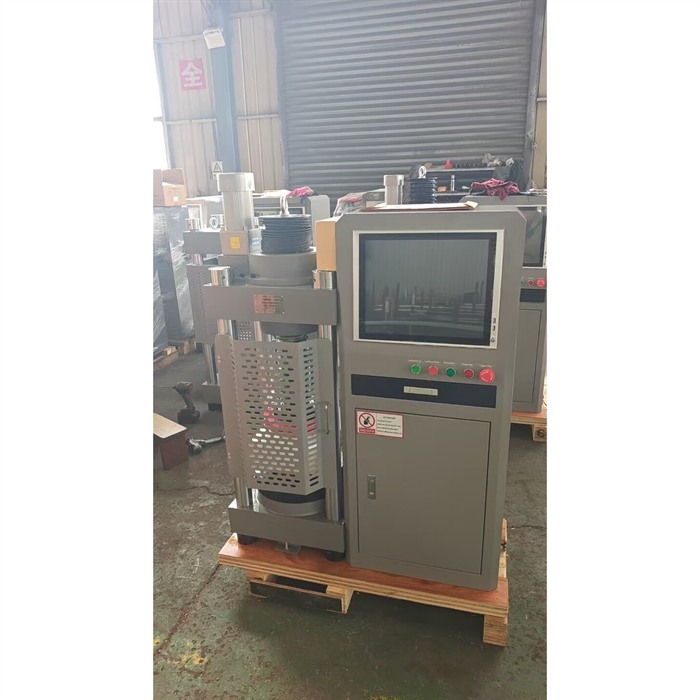
Standards and Applications Covered
- ASTM C496 covers the splitting tensile strength of cylindrical concrete specimens, the indirect tensile test a compression frame performs with a splitting jig.
- ASTM C469 covers the static modulus of elasticity and Poisson's ratio of concrete in compression, measured over a controlled stress cycle rather than at failure.
- AASHTO T22 covers the compressive strength of cylindrical concrete specimens for highway and transportation work, where acceptance limits and record keeping are part of the test.
Alongside these, the machine covers cube and cylinder compression for mortar, brick, block and cement specimens, compression of rubber pads, and the upsetting test of metal, which is the range a general purpose building materials laboratory actually needs rather than a single specimen type.
Frequently Asked Questions
1. Can a compression machine really measure tensile strength?
Yes, indirectly. In the splitting tensile test the cylinder is loaded in compression across two opposite lines, and the geometry converts that load into a transverse tensile stress that splits the specimen. The tensile strength is calculated from the load at failure, the specimen dimensions and the length of the bearing lines.
2. Why is the modulus test harder than a cube crush?
Because it measures a slope rather than a peak. The machine has to hold a steady load ramp through several cycles and record deformation accurately at the same time, so both the control loop and the deformation channel have to be good, not just the Load Cell.
3. How do I know the platen is big enough?
The platen has to be at least as large as the bearing face of the largest specimen you intend to test. If the specimen overhangs the platen, the unloaded margin confines it and the measured strength comes out higher than the true value.
4. What has to be recorded for an AASHTO T22 result to be usable?
Specimen identity, dimensions, cast date and test age, the loading rate, the peak load, the calculated strength and the failure mode. The record has to survive an audit without being re-keyed, which is a software requirement rather than a hydraulic one.
5. Do I need a separate machine for splitting tensile and modulus?
No. The same frame carries all three tests with the appropriate fixtures and software methods. What changes is the accessory set and the method selected, not the load capacity of the machine.
Contact me if you are interested!
Email: admin@jnkason.com
Whatsapp: +86 15910081986