


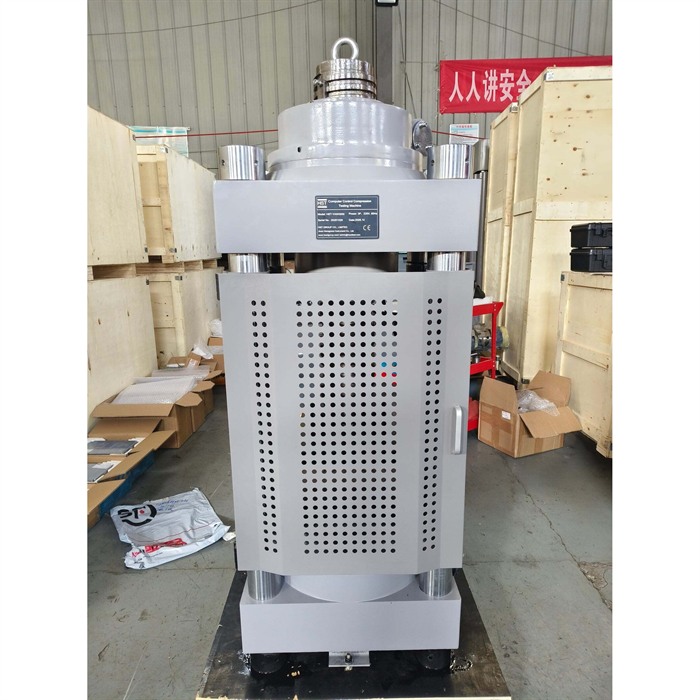
KASON CTM306F is a computer control Compression Testing Machine in the concrete compression testing machine range, built for building materials that do not arrive as neat cubes. A concrete cube is the easy specimen: it is cast in a mould, capped flat, and crushed between two Platens with the load applied evenly. A block, a brick or a masonry prism is a different problem. It is not square, its faces are not parallel, its bedding decides where the load goes, and the number that comes out of the Test depends on decisions made before the machine is even switched on. This machine is built for that second group of specimens.
Key Takeaways
- The result of a block or brick test is dominated by bedding and capping, not by the Load Cell; the machine's job is to remove every other variable.
- Platen size has to be compared with the specimen footprint before the machine is chosen, because a platen smaller than the unit creates a false confinement.
- A frame of this capacity exists for masonry prisms and high strength units, where a smaller compression frame runs out of force before the specimen fails.
- Control is by servo valve with closed loop force feedback, so a constant stress rate can be held as the specimen stiffens and then softens near failure.
- The reported figure is compressive strength, calculated from peak load and the measured bearing area, not peak load alone.
Why a Block Is Harder to Test Than a Cube
Three things go wrong with a masonry unit that never go wrong with a moulded cube. The first is bedding. A block is normally tested flat, in the direction it carries load in the wall, but a brick may be tested flat, on edge or on end, and each orientation gives a different strength, so the orientation has to be stated and held. The second is surface regularity. A unit that has been stored on a pallet picks up grit, and a single hard particle between the platen and the face is enough to start a splitting failure early. The third is capping. Where the faces are not parallel within the tolerance the standard allows, a mortar or plaster cap is used to even them out, and a cap that is too thick or too soft absorbs part of the load and reports a strength that the unit does not have.
Platen Size, Bearing Area and the Confinement Trap
When the platen is larger than the specimen face, the specimen is free to expand sideways as it is compressed and the test measures the material. When the platen is smaller, or the specimen overhangs it, the unloaded margin restrains that expansion, the specimen behaves as if it were confined, and the strength comes out higher than it really is. This is why the bearing area used in the calculation has to be the area actually loaded, and why the platen has to be checked against the largest unit the laboratory expects to test, not against the average one. A machine chosen for cubes alone will often disappoint the first time a full sized block is put in it.
The Frame Above the Specimen
Compression frames are judged on stiffness rather than on rated force alone. As the specimen approaches failure it stores elastic energy, and a soft frame releases that energy back into the specimen when it breaks, which produces a violent failure and can damage the platens and the specimen faces. A stiff frame with a properly seated spherical upper platen distributes the load evenly across the face, keeps the loading axis vertical, and lets the specimen fail in the pattern the standard expects rather than in a corner. The spherical seat matters more than it looks: a platen that is flat but slightly out of parallel loads one edge first, and the crack starts there.
Servo Valve, PID and the Stress Rate
Concrete and masonry standards do not ask for a crosshead speed; they ask for a stress rate, expressed as force per unit area per second, held within a tolerance until failure. That is a control problem rather than a measurement problem. The hydraulic circuit here uses a servo valve under closed loop force feedback, with a PID strategy holding the ramp, and the peak value is captured at the moment of failure so that the strength calculation is not distorted by a slow sampling interval. A machine that can only run at constant speed will drift outside the permitted rate as the specimen stiffens, which is exactly when the reading matters.
Standards and Applications Covered
- ASTM C1314 covers the compressive strength of masonry prisms: an assemblage of representative units, mortar and grout, built and tested to verify that the masonry as constructed meets the specified strength. A prism is the largest specimen in this list, which is why the frame and the platen have to be chosen for it rather than for the single unit.
- ASTM C140 covers sampling and Testing of concrete masonry units, including the compressive strength of the unit itself, which is the test a block producer runs on every production change.
- BS EN 772-1 covers the determination of compressive strength of masonry units, and it is the method most European specifiers cite when a block or brick is declared fit for a load bearing wall. It defines the conditioning, the bedding, the capping and the conversion of the result to a normalised strength.
Between them these three cover the European unit side, the American unit side and the assembled wall side of the same laboratory's workload, which is why one frame with a wide platen and a stiff structure is usually a better buy than two smaller machines.
Software, Records and Repeat Tests
The computer layer is what turns a compression frame into a reporting instrument. The test is selected from a list of methods, the specimen dimensions and the expected strength are entered, and the software proposes the loading rate that the method requires. The load time curve is plotted live, the peak is captured automatically, the strength is calculated and the report is printed or exported. Interval timing and continuous testing matter more than they sound: a laboratory crushing a set of six units wants the machine to run the set without an operator resetting between specimens, and it wants the report to show all six results together, so that the scatter can be judged. Overload protection stops the pump when the force goes beyond the protected range, which protects both the load cell and the operator.
Frequently Asked Questions
1. Can one machine test cement mortar, concrete cubes and blocks?
Yes, with the right platens and accessories. The frame and the control system do not change; what changes is the platen size, the capping arrangement and the method selected in the software. A laboratory that tests all three should size the frame for the largest and strongest specimen it expects, not for the cube.
2. Why does the platen have to be larger than the specimen?
So that the specimen can expand sideways as it is compressed. If the platen is smaller than the face, or the specimen overhangs, the unloaded margin confines the specimen and the measured strength is higher than the true value.
3. How is a block prepared before testing?
It is conditioned, its bearing faces are checked for parallelism, and where they are outside tolerance a cap is applied, following the method in use. The unit is then centred on the lower platen in the orientation the standard specifies, and the load is applied at the required stress rate until failure.
4. What is the difference between testing a unit and testing a prism?
A unit test measures the block or brick itself. A prism test measures a small assemblage of units and mortar, which is closer to how the wall actually behaves and gives a lower, more realistic figure. Prisms are larger and need a frame with more force and a wider platen, which is the reason capacity and platen size are chosen together.
5. What has to be recorded besides the peak load?
The specimen identification, its dimensions and bearing area, the orientation, the capping method if one was used, the loading rate, the date and the failure pattern. The strength is then calculated from the peak load divided by the bearing area, and the failure pattern is what tells a reviewer whether the number can be trusted.
Contact me if you are interested!
Email: admin@jnkason.com
Whatsapp: +86 15910081986